
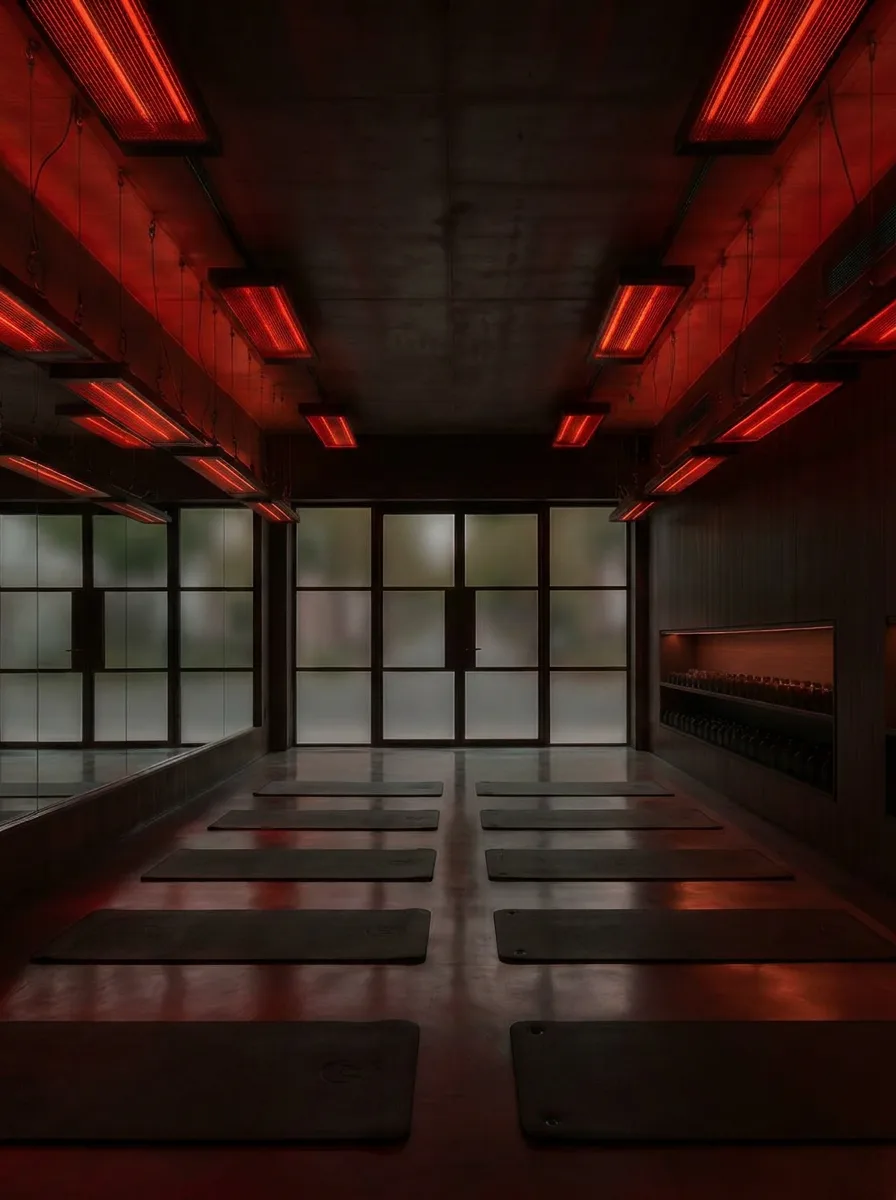
The short answer. Hot Pilates is Pilates in a heated room: controlled, low impact, mostly your own bodyweight. Hot Strength, until recently called Hot Sculpt, is functional strength training under load, run in infrared heat at 38 degrees, with intervals that get you out of breath and a deep stretch at the end. It is built for men and women alike, which is where it parts ways with the studio-class stereotype. Same heat, different job. One refines how you move. The other changes what your body can do under resistance. Hot Strength grew out of Hot Pilates and went past it, and the rest of this explains the difference.
Heat has become shorthand for intensity. Put a class in a warm room, add a word to the name, and it sounds harder than it is. That is roughly how these two ended up side by side on the same schedules, described in the same language, delivering two completely different mornings. People book one and get the other. Someone comes in to be worked and leaves stretched. Someone else comes in to stretch and cannot lift their arms the next day. Worth knowing which one you signed up for.
What Hot Pilates actually is
Hot Pilates is Pilates, performed in a heated room. The method stays recognisable: controlled, core-led, low impact, built around alignment and breath. The heat lifts the heart rate and loosens the body, so familiar movements feel more demanding and you sweat through them. What it is not is strength training under load. There are rarely weights. The resistance is your own body, moved with precision. Done well it is restorative and exacting at once, and for control, mobility and core work it earns its place. It is simply a different job from the one we do.
What Hot Strength actually is
Hot Strength is functional strength training, run in infrared heat at 38 degrees, which warms the body directly and not only the air around it. Weights, compound movements, and intervals that get you out of breath, sequenced so the muscular work and the cardiovascular work come together in one session, with a deep stretch to close. The room is mixed by design: men and women training the same session at their own load. It takes the discipline of proper strength training and the pacing of a well-built interval workout, and uses the heat as additional load rather than as atmosphere. It is genuinely exhausting, in the way training is supposed to be. You leave stronger, not just looser.
What the heat is actually doing
Start with what it is not doing. Sweat is water, not fat. The kilo you appear to lose is water you drink back within the hour, and the work people call detox is done by your liver and kidneys, not your sweat glands. So the dramatic part, the puddle on the mat, is the least important part of the whole thing. What the heat actually does is more useful.
At 38 degrees your body has to cool itself, so your heart rate climbs and stays there. You get a real cardiovascular load at low impact: less strain on the joints, more demand on the system. Heat also widens the blood vessels, and more circulation means more oxygen reaching working muscle during the session and faster clearance afterwards. That is the part that genuinely supports recovery. Warm muscle and connective tissue move more freely too, so range of motion opens up and the work reaches more of the muscle rather than stopping at the first tight spot.
Over time the body adapts to being trained in heat. Thermoregulation and circulation get more efficient, and some of that carries into your other training when there is no heat involved. The heat is not the workout. It is what lets the workout do more.
The difference that matters
Both are hard. They are not hard in the same way, and they are not training the same thing. Pilates asks for control. Strength asks for output. One refines how you move, the other changes what your body can do under resistance. The heat is common to both, which is exactly why you should not choose by it. The question was never whether a class is hot. It is whether there is load, and what that load asks of you.
Why we call it Hot Strength
Hot Strength started from Hot Pilates. That is the honest lineage, and it is why the two still get mentioned in the same breath. What we changed is the load. We put real weights in the room, built the session around strength rather than around control, kept it at 38 degrees, and finished it with a deep stretch. Somewhere in that process it stopped being a heated Pilates class and became strength training that happens to be hot.
For a while we called it Hot Sculpt. Sculpt suggests shaping, and shaping is not what happens in there. People get stronger. Hot Strength says that plainly, and it lines up with what we have said from the start. We put the question to our community before changing it, and they landed where we did.
The training itself has not changed. Weights, real load, heat that works for the session rather than standing in for it, and a stretch at the end that most people say they did not know they needed.
Hot Strength sits inside TRAIN, the training layer of the CÉCILE Method, next to Lagree on the Megaformer. Everything we offer works on its own: Hot Strength and Lagree for training under real load, CONDITION with red and near-infrared light and cryotherapy for recovery. Each stands alone and holds up alone. On top of that we offer guidance, suggested combinations for the goal you are actually training for, so strength, conditioning and recovery line up without you having to work it out. Book a single session, or a combination that fits together. Both work.
Common questions
Yes, it is the same class under a clearer name. Sculpt described shaping, and the session is about getting strong, so we renamed it.
It came from Hot Pilates and outgrew it. The heat and the room are familiar. The difference is load: real weights, strength work for men and women, and a deep stretch at the end.
Yes. It is strength training under load, programmed for mixed rooms. The heated studio format has a reputation for being women only, which this is not. Same session, individual load.
It builds control, core strength, and endurance in the muscles you already have, using bodyweight resistance. For adding strength under external load, that is not what it is built for. Hot Strength is.
Yes. The load and the pace scale, so newcomers and trained bodies work in the same room at different intensities. The heat is the same for everyone. What you lift and how hard you push is not.
They do different things, so the honest answer depends on what you want. Hot Strength places more total demand on the system because it combines load with cardiovascular work. Hot Pilates does more for controlled movement and alignment. Neither is a weight-loss trick, and the more useful measure is what you build, not what you burn off in a single session.
Weights are part of it, provided in the studio. The load is what separates it from a heated bodyweight class.
Strength looks good on you.